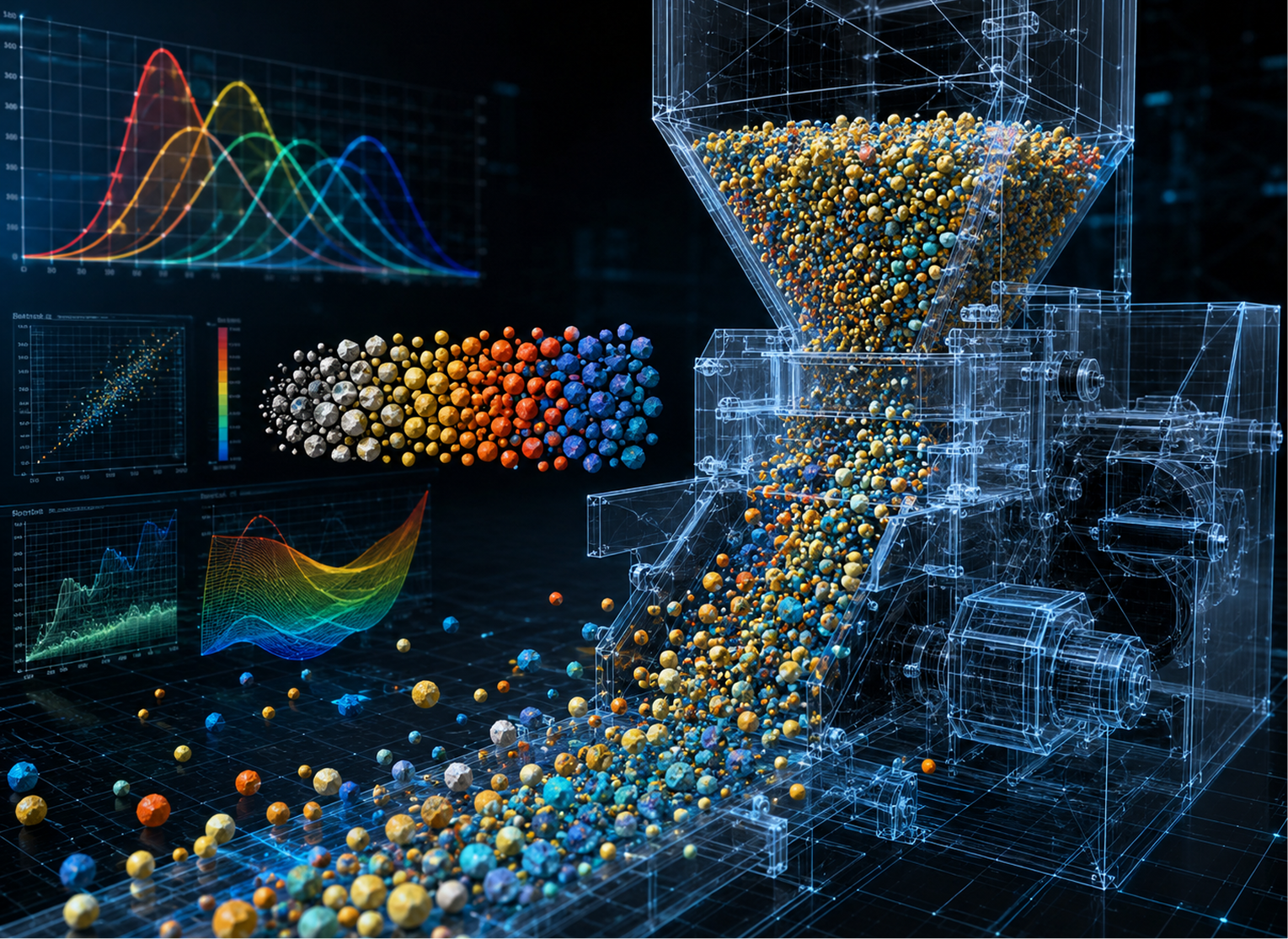
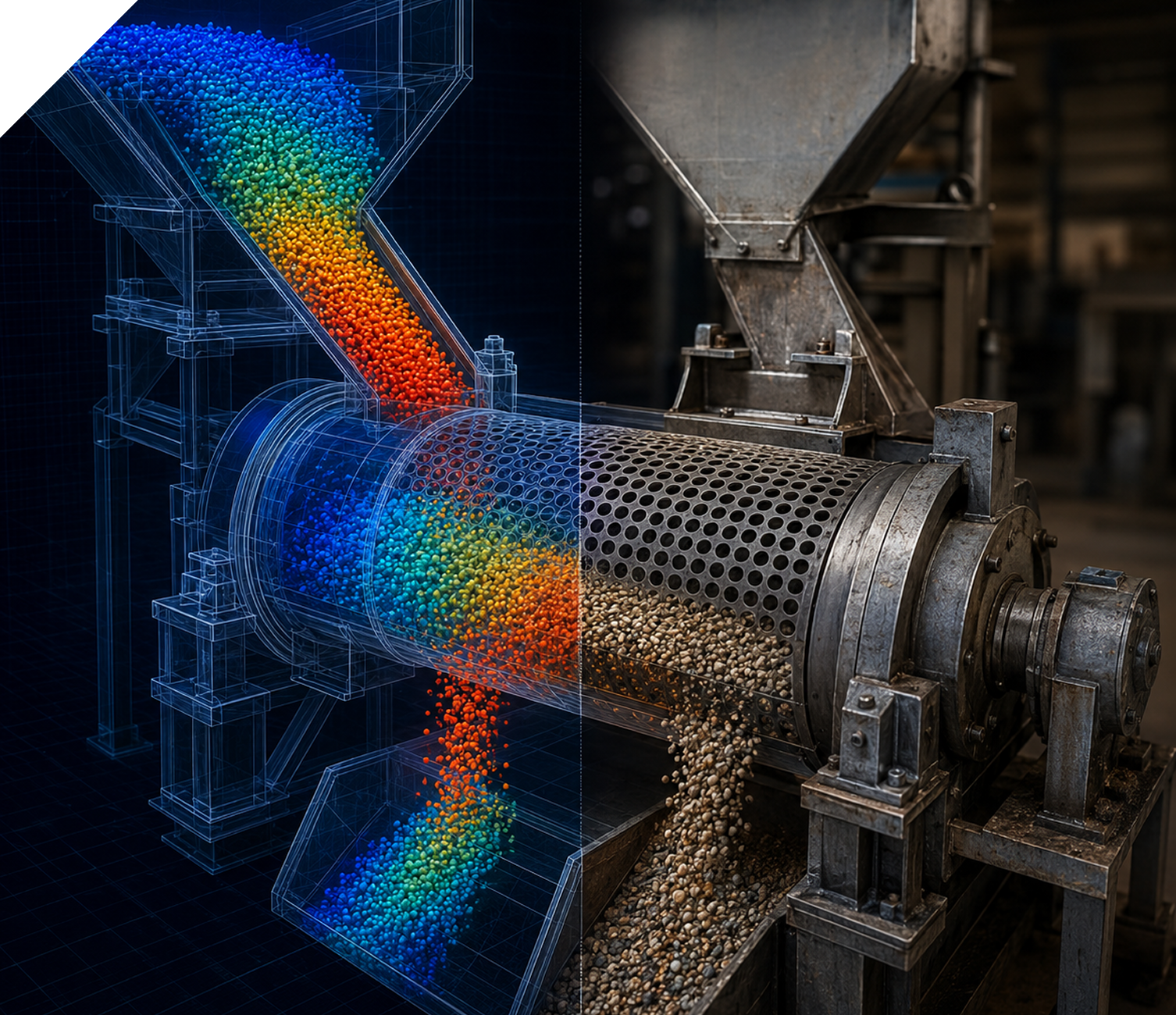
We use DEM to simulate how individual particles move, collide and interact with equipment. This helps organisations design and troubleshoot conveyors, chutes, mixers and other systems that handle powders, pellets, grains and ores.
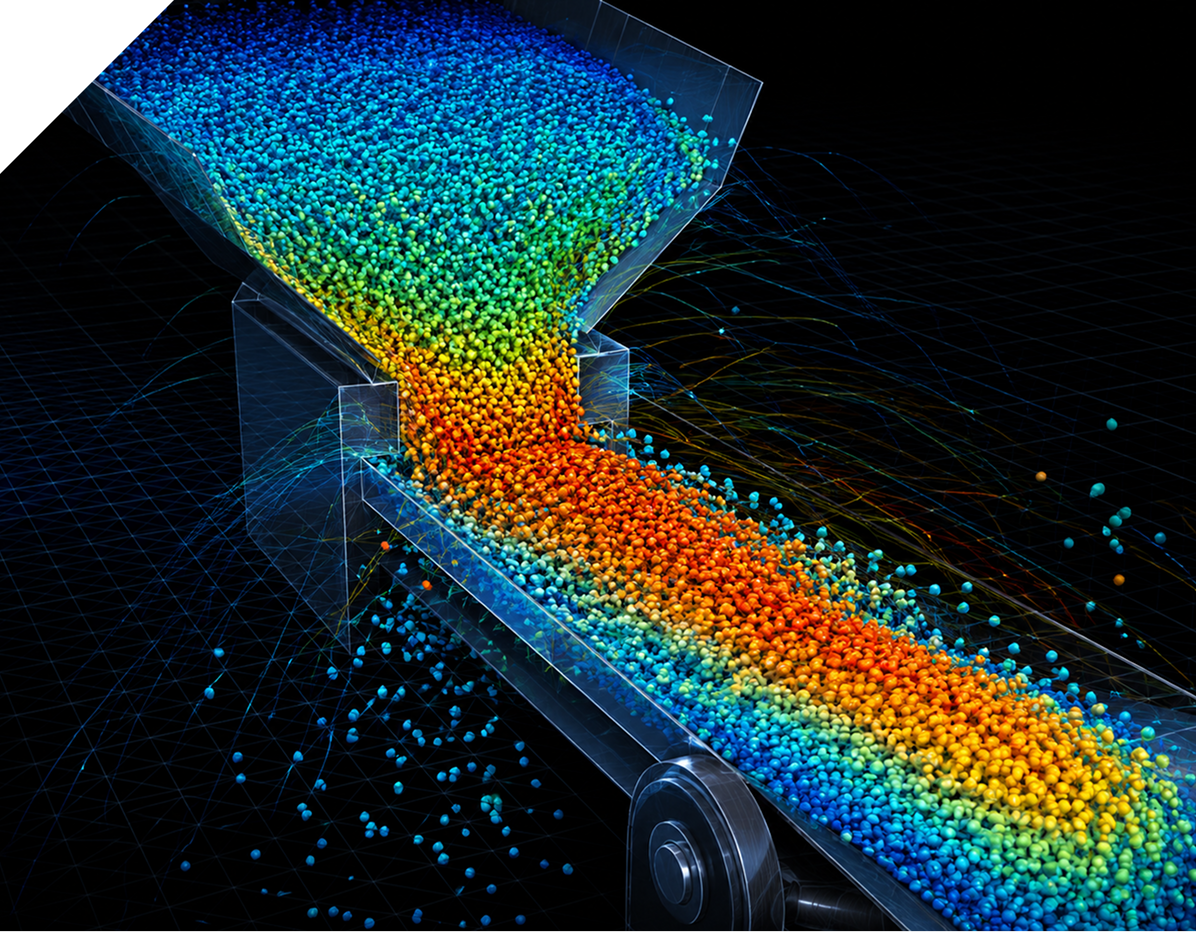
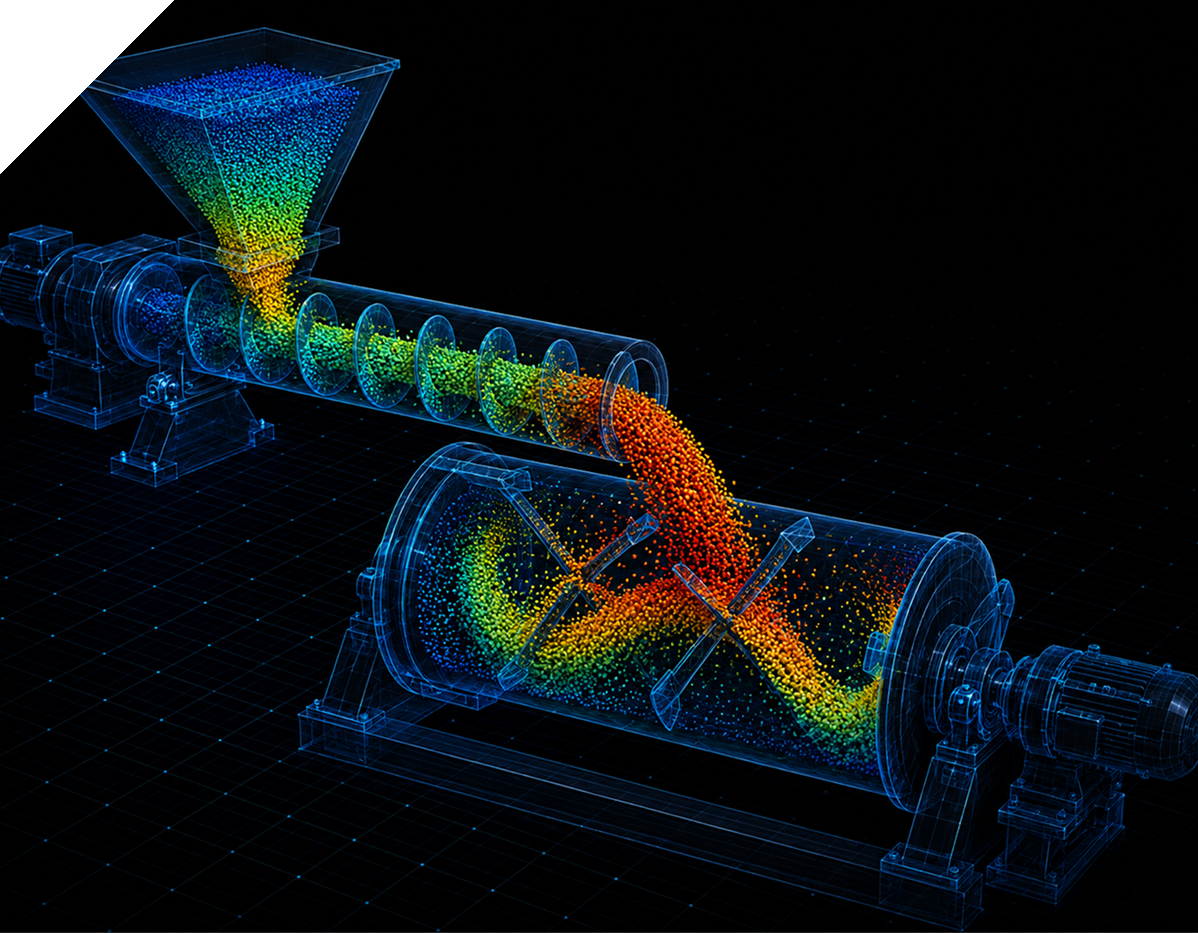
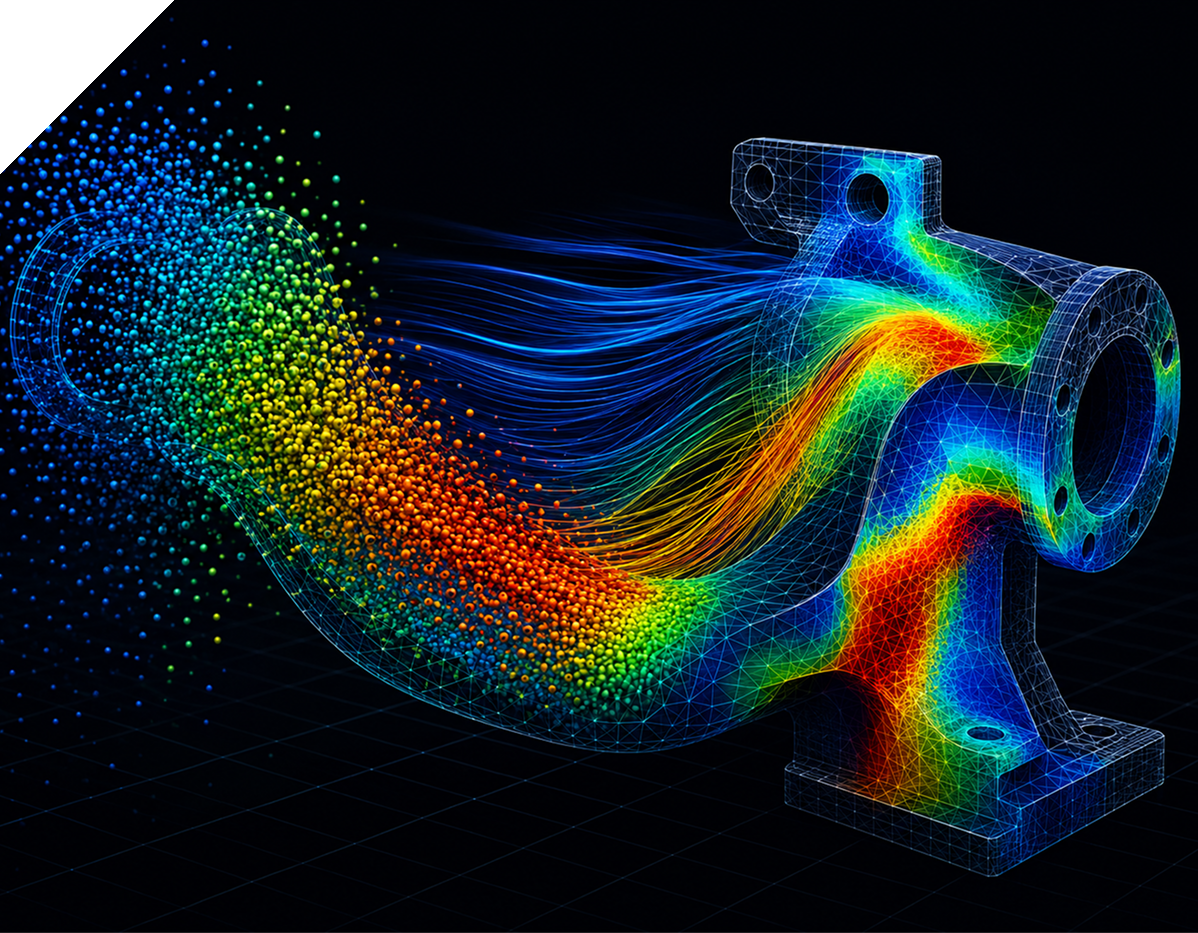

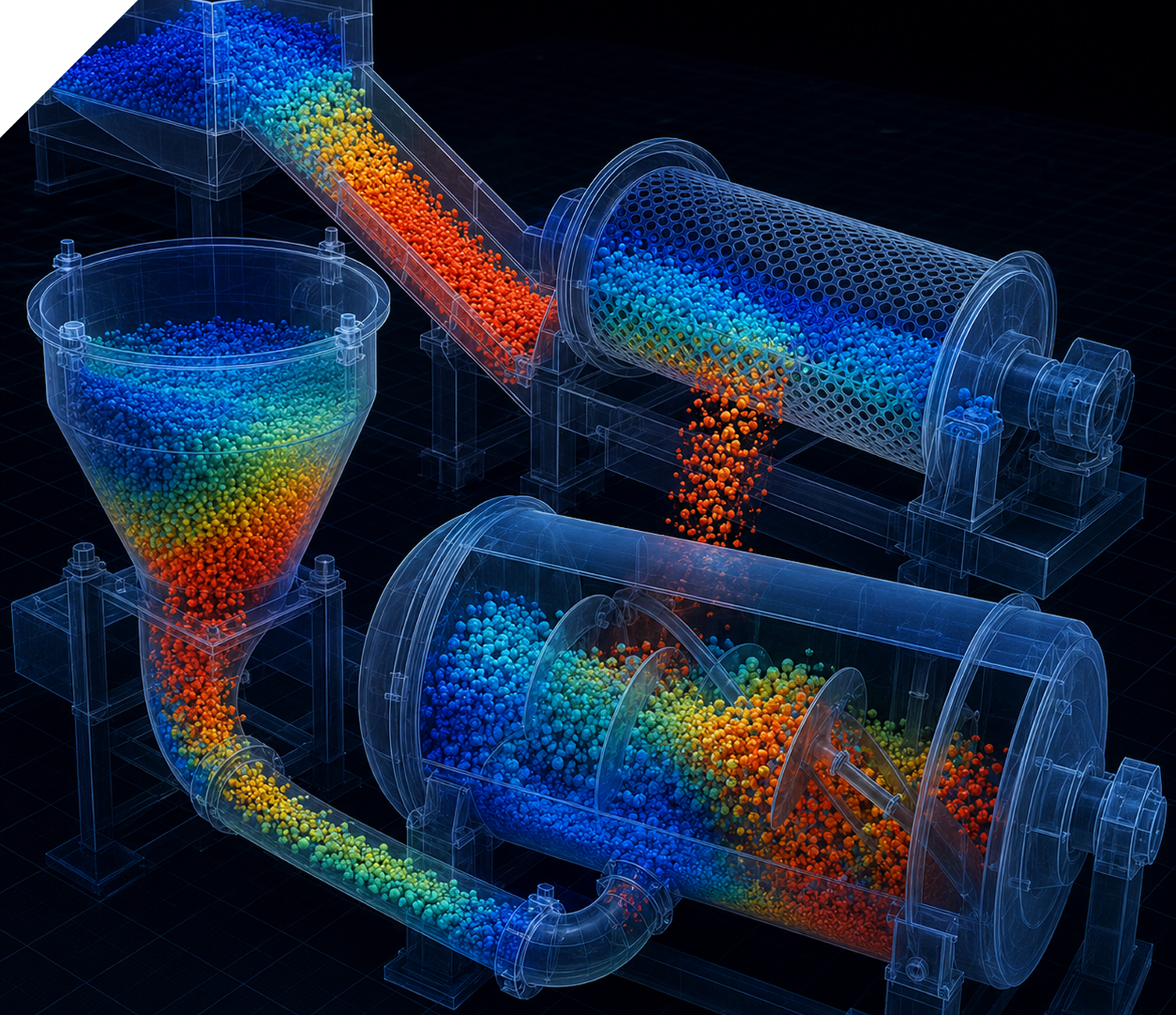
Applications where material flow is hard to observe directly: transfer chutes, hoppers, silos, screens, crushers, mixers and coating drums. DEM provides a way to see flow patterns, impact zones and segregation before changes are made.
HOW WE COLLABORATE
DEM is a numerical tool that complements plant experience and testing. We aim for calibrated models that capture the key behaviour without over‑complicating the physics, and we are clear about where its predictions are most reliable.
DISCRETE ELEMENT METHOD
The examples below mirror the themes in your DEM pillar and typical industrial use of DEM.
If you are dealing with bulk solids or granular flows,DEM can provide a structured way to test ideas virtually.
We can start with one problematic chute or mixer and build understanding from there.
DISCRETE ELEMENT METHOD
The approach follows the same pattern as our CFD, FEA and Field‑Driven Design practices.
Gather information on material properties, size distribution and any known issues in operation.
Agree on which sections of the equipment to model and which questions DEM should help answer.
Calibrate models using simple tests or available data before moving to design changes.
Present flow patterns, forces and wear indicators alongside clear design recommendations.
Document assumptions and limitations so plant and design teams can interpret results correctly.
Where useful, provide models that your team can use for future scenarios.
Curious Whether DEM Is A Fit? Share a short description or sketch of your system and we'll respond with an informal view on applicability, effort and likely value – before you commit to a full project.
A sample of engagements across our sectors. More case studies are being prepared as current programmes reach a publishable stage.
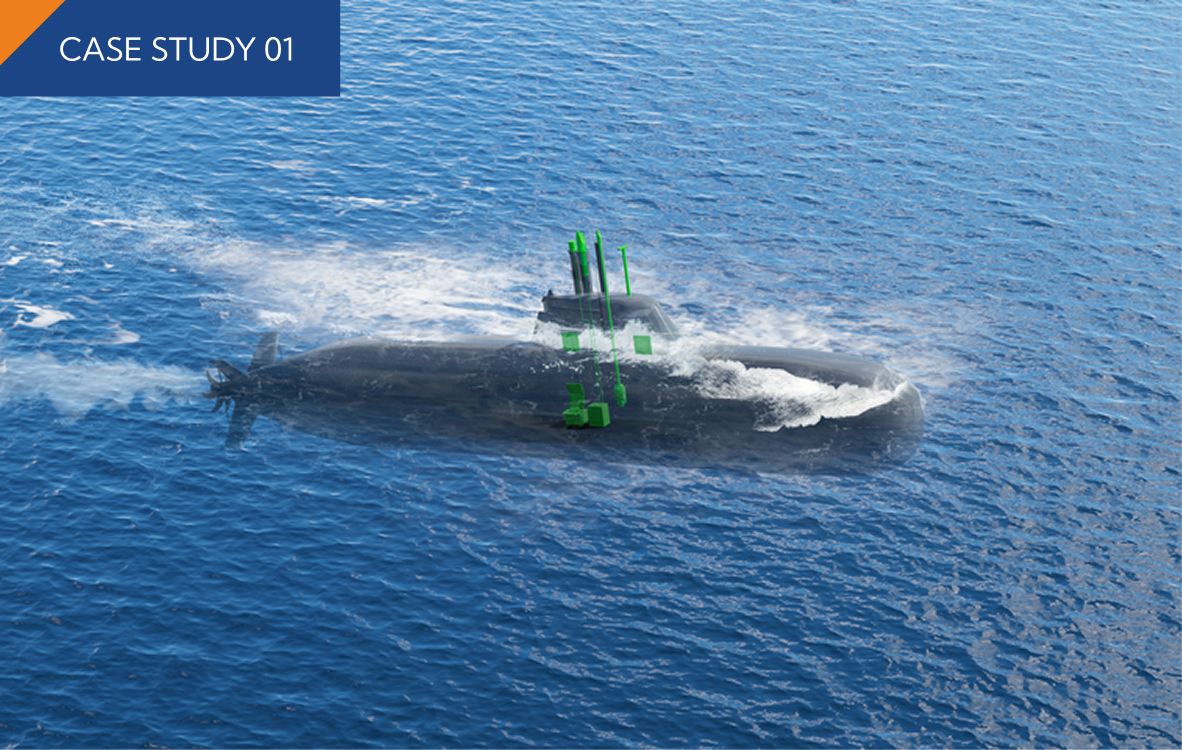
Conjugate heat-transfer simulation of a submarine mast assembly, validating thermal margins for embedded electronics under sustained operational loads.
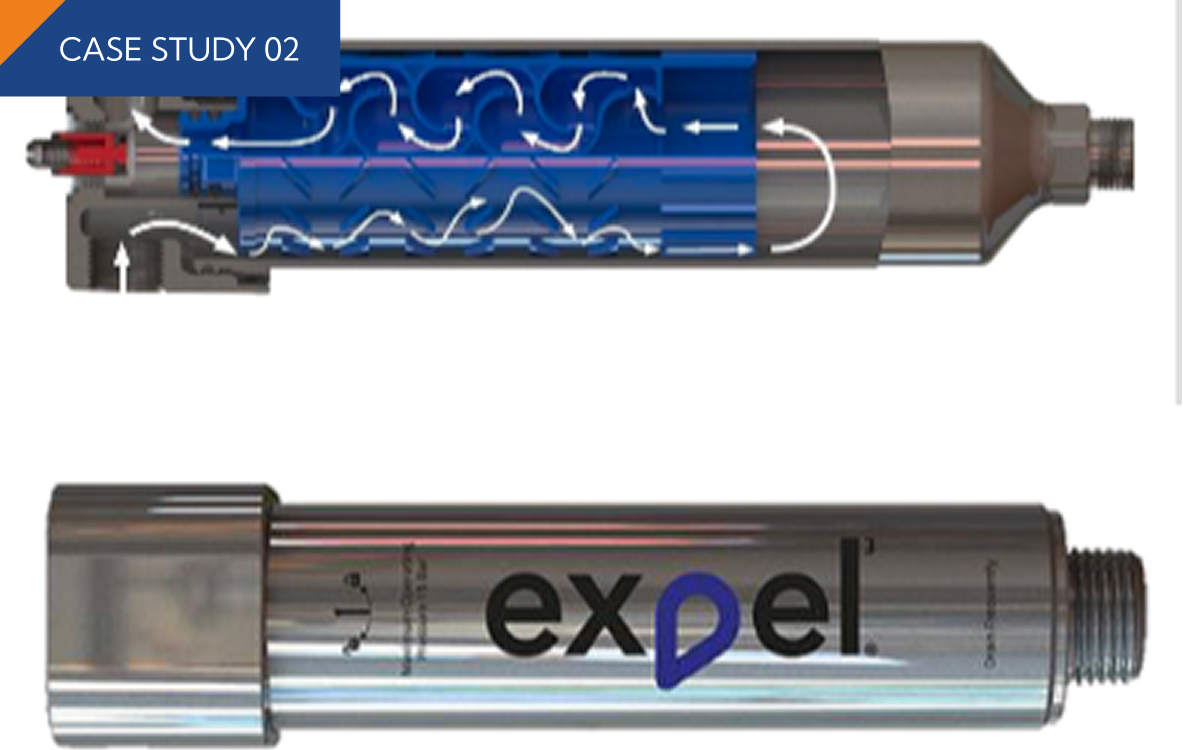
Multiphase CFD study of an advanced filtration system for ERIKS UK's Expel range, characterising pressure drop and flow uniformity across duty conditions.
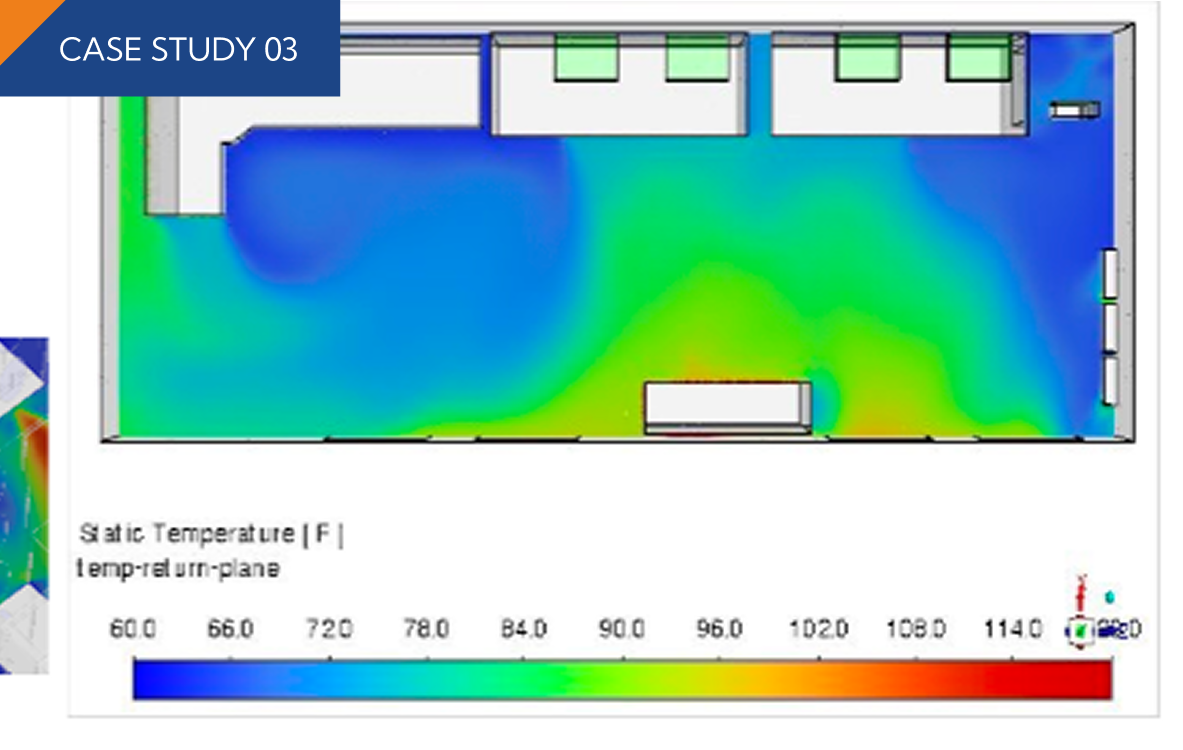
Delivered a CFD-driven HVAC cooling assessment that verified system redundancy, optimized cooling performance, and ensured reliable operations.

Discover how AI-driven engineering simulation and multiphysics solutions solve complex challenges across defence, aerospace, marine, and industrial sectors.